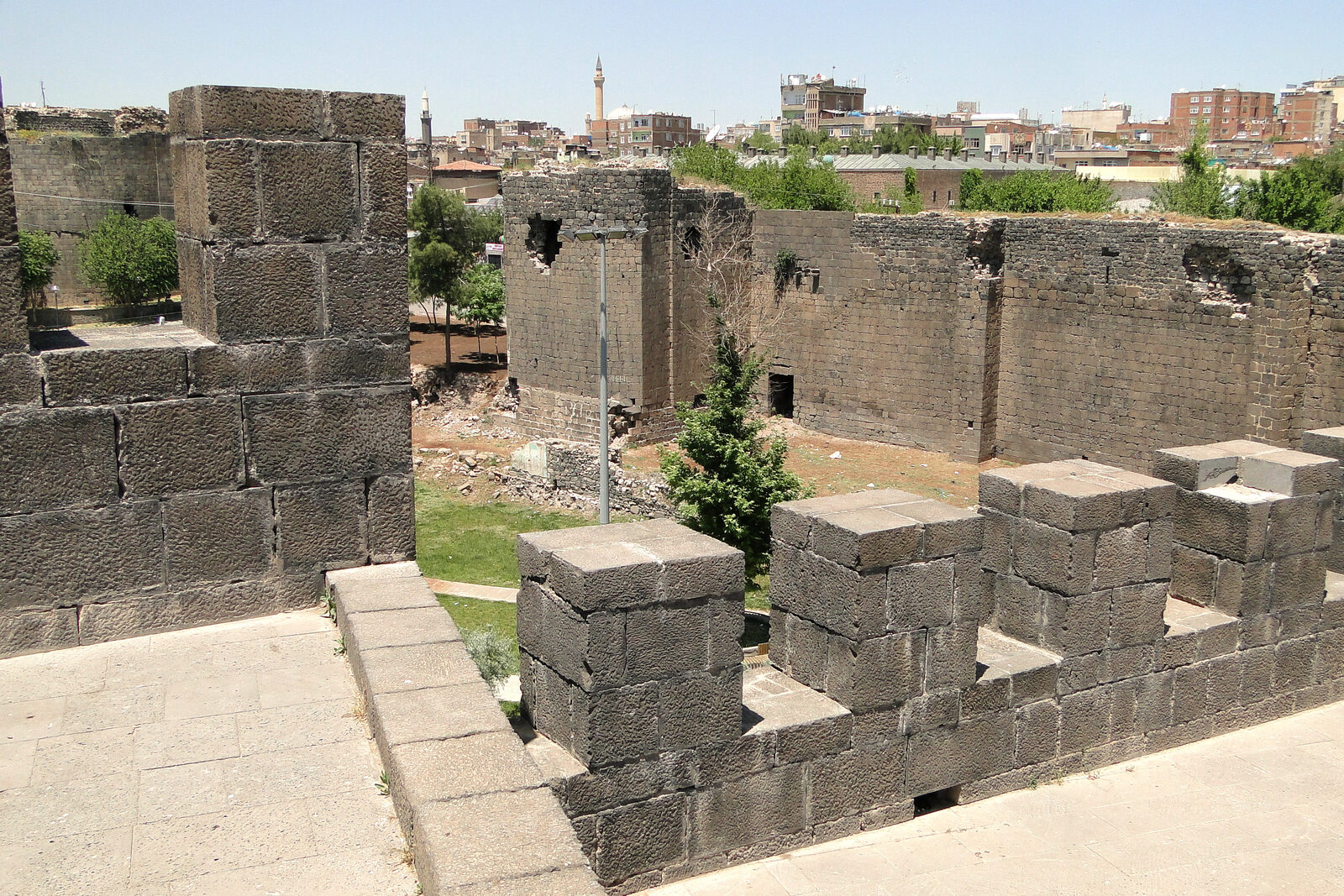
The Ramparts
Walk the chemin-de-ronde from the Mountain Gate to Mardin Gate, past towers carved with twin-headed eagles, the Tigris valley falling away below.
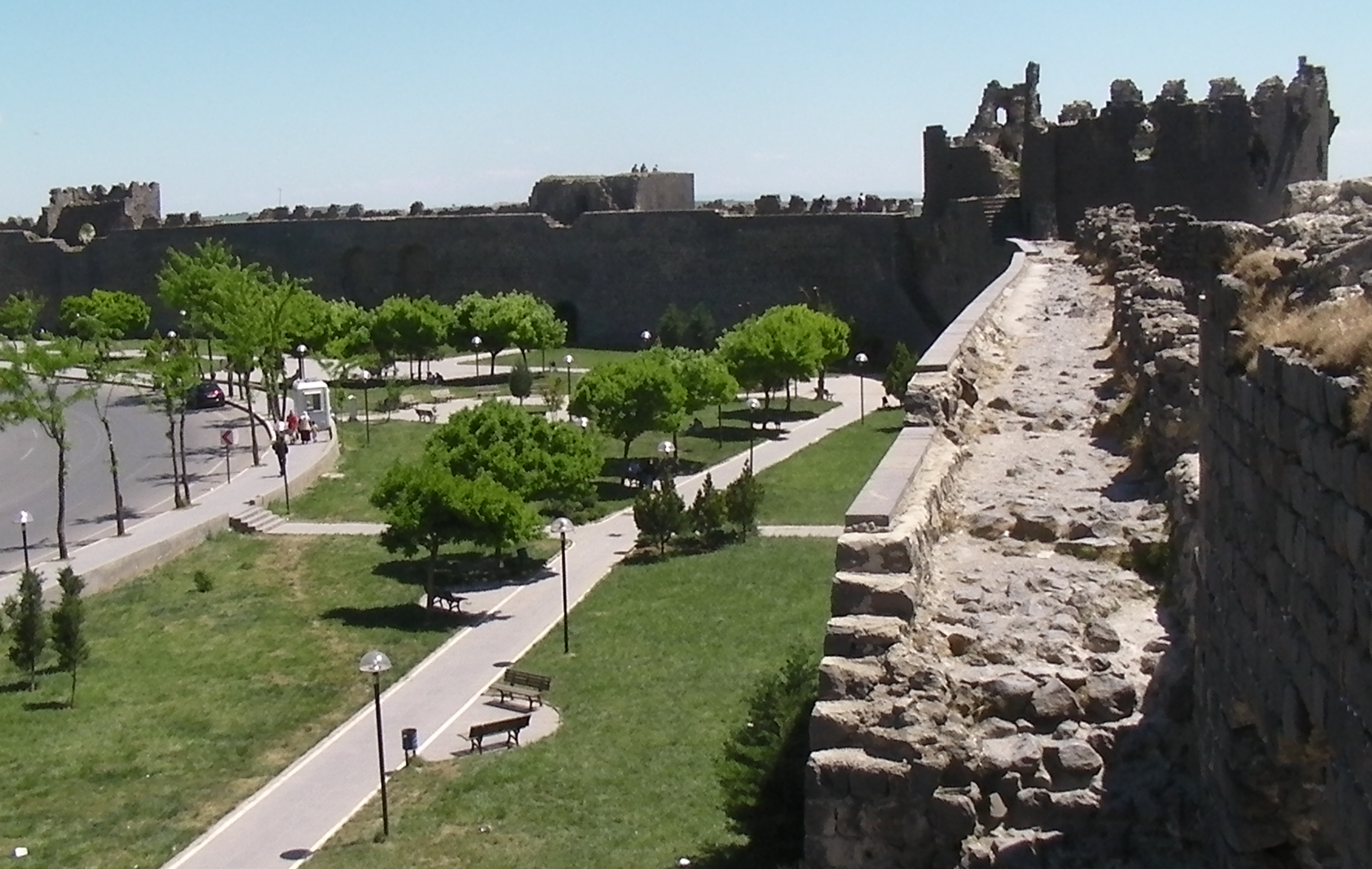
At the head of the Tigris · Upper Mesopotamia
Diyarbakır rises in black basalt on the banks of the Tigris — for nine thousand years a frontier where Rome met Persia, and the doorway to the oldest sanctuaries on earth. We lead small groups through the walled city and out across Upper Mesopotamia, slowly and with people who know the stones by name.
A ring of black basalt wraps the old city of Sur for almost six kilometres, ten to twelve metres high, raised on a volcanic plateau a hundred metres above the Tigris. The Romans called the city Amida; the Turks called it Kara Amid — Black Amida — for the dark stone that gives it its face.
Inscribed by UNESCO in 2015, the walls carry the marks of every power that held this crossing: Roman courses, Artuqid towers carved with lions and eagles, Ottoman repairs — thirty civilizations layered into one rampart.
Read the ground
Stand anywhere in Sur and you stand on a stack of cities. Each empire built on the last, in the same black stone — this is the order they came in.
And older still, on the same horizon: Göbekli Tepe, raised before pottery, before writing, before the wheel.
Inside the walls · Sur
Everything below sits within the old city — close enough to cross on foot between morning tea and an evening on the ramparts.
Walk the chemin-de-ronde from the Mountain Gate to Mardin Gate, past towers carved with twin-headed eagles, the Tigris valley falling away below.
The Bakırcılar bazaar still rings with hammered copper. Diyarbakır's silver and gold filigree — telkari — is some of the finest in the region.
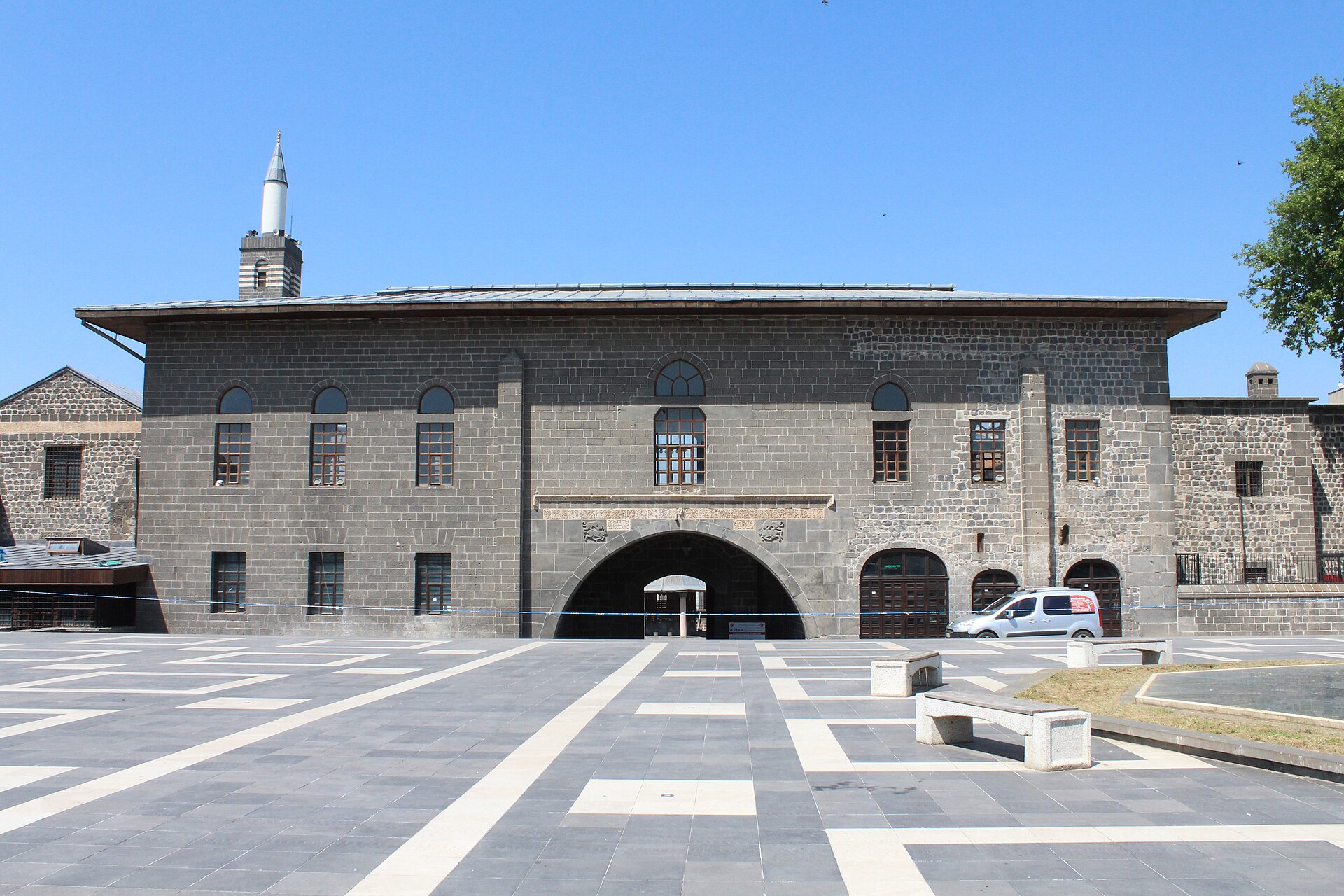
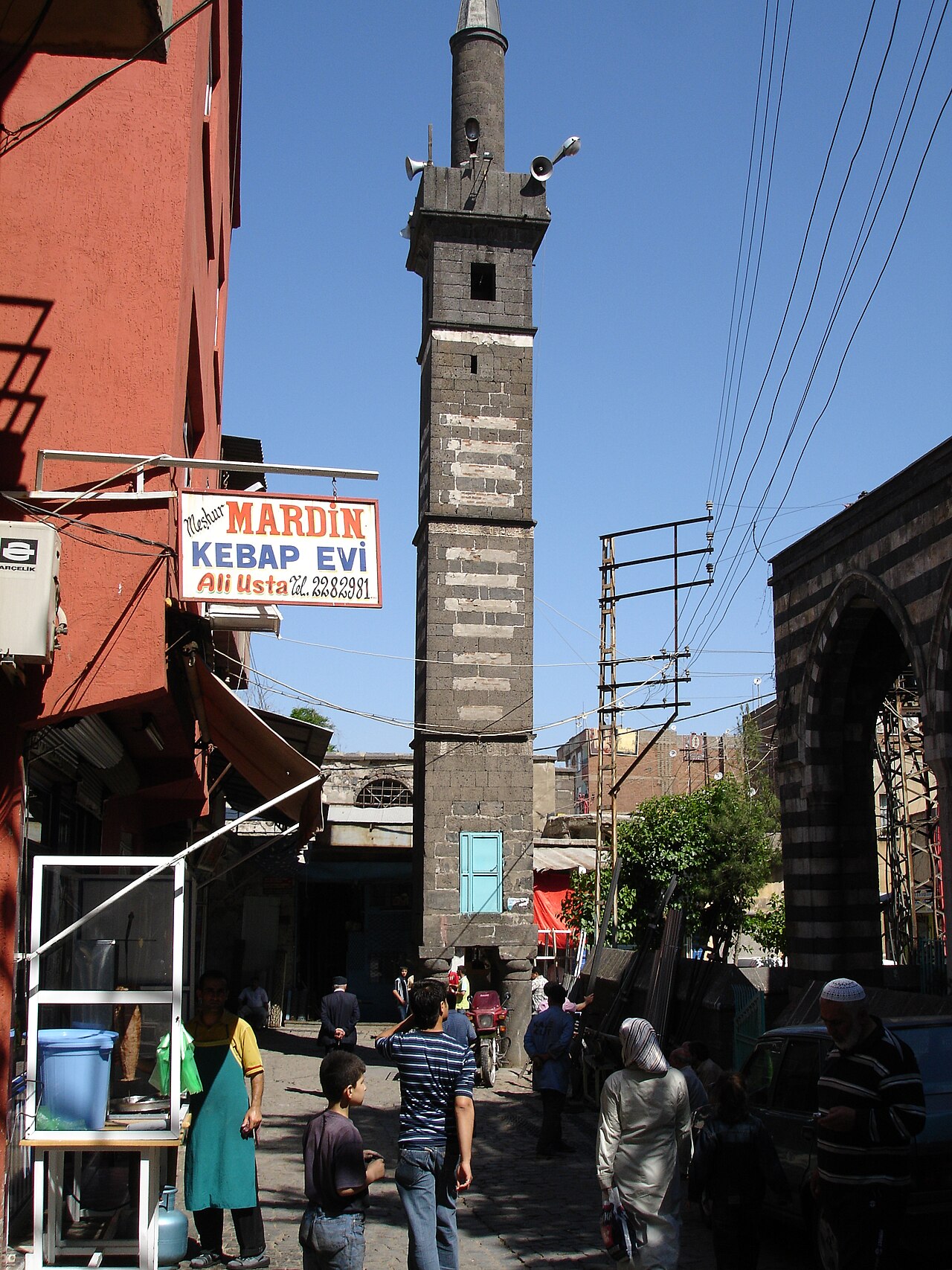
Ulu Camii, the oldest mosque in Anatolia, set in a Roman-style courtyard — plus the city's quartet of historic mosques and the famous four-footed minaret.
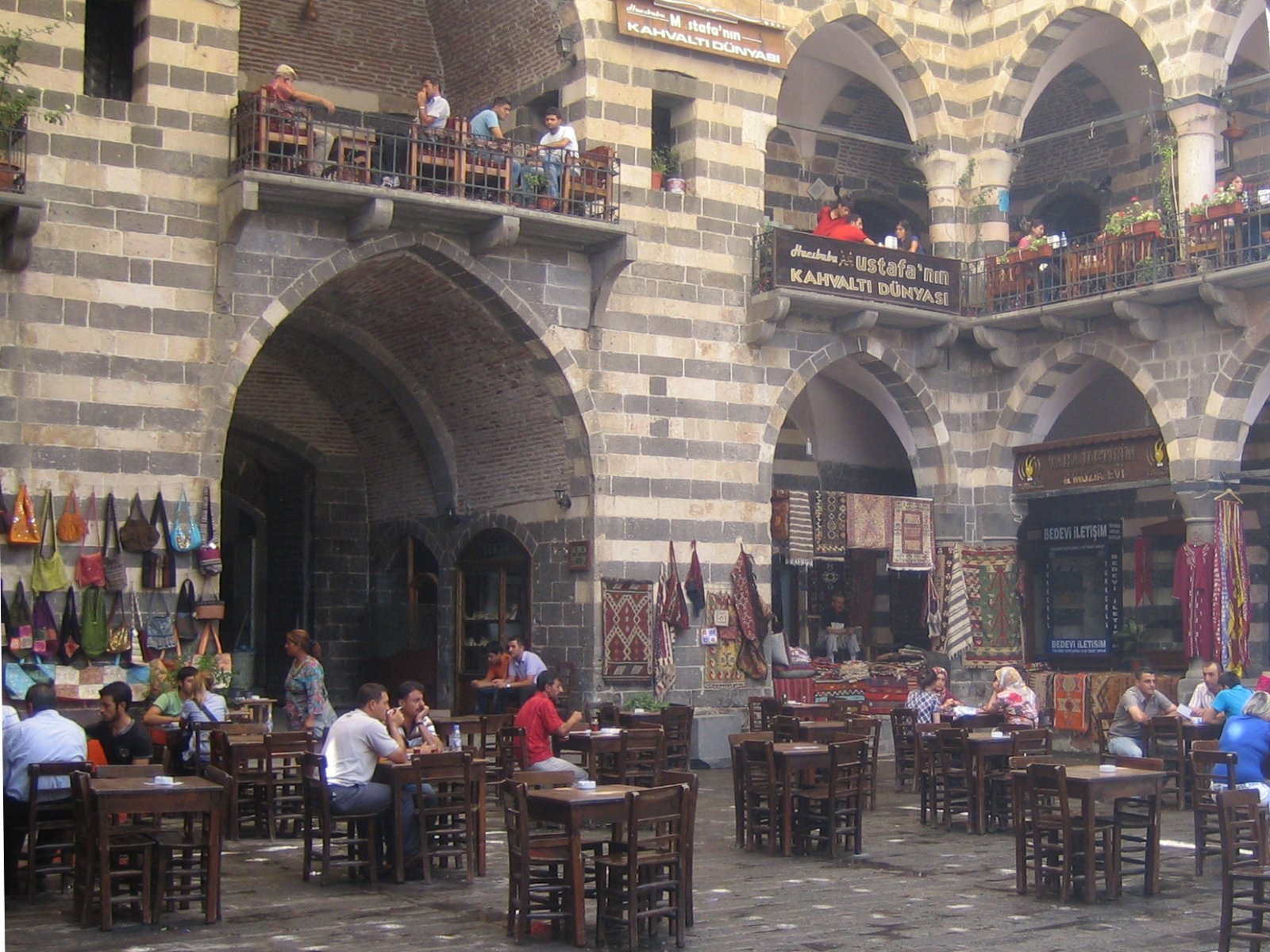
A 1575 Ottoman caravanserai of striped black-and-white stone. Its arcaded courtyard is now the city's favourite place for breakfast and endless small glasses of tea.
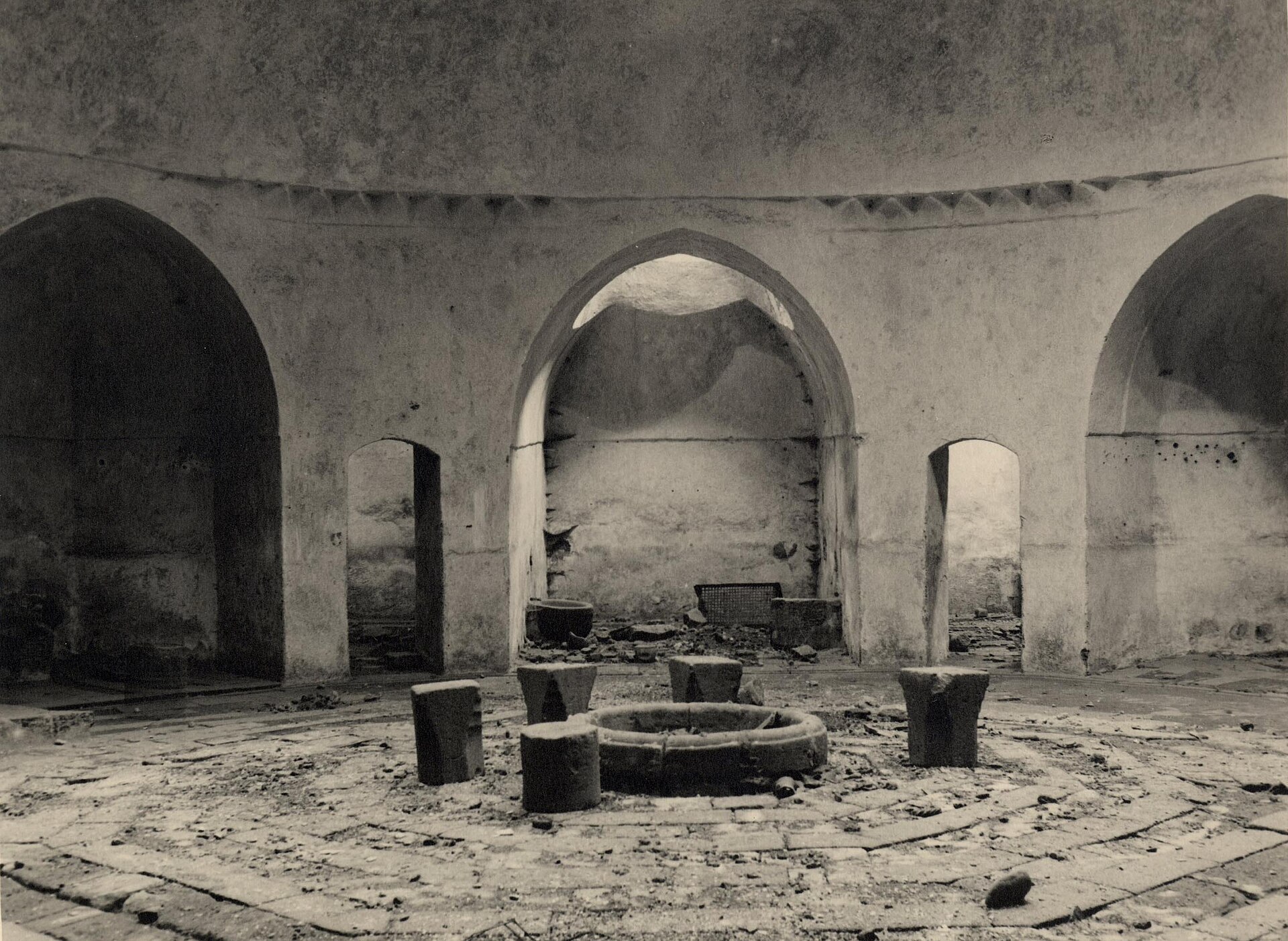
Domed Ottoman baths cut from the same basalt, light falling in shafts through star-holes in the ceiling. Steam, scrub, and a glass of cold şerbet after.
İçkale — the citadel and Amida Mound — now an open-air museum with the Archaeology Museum and the black-and-white Cemil Paşa Mansion, the City Museum.
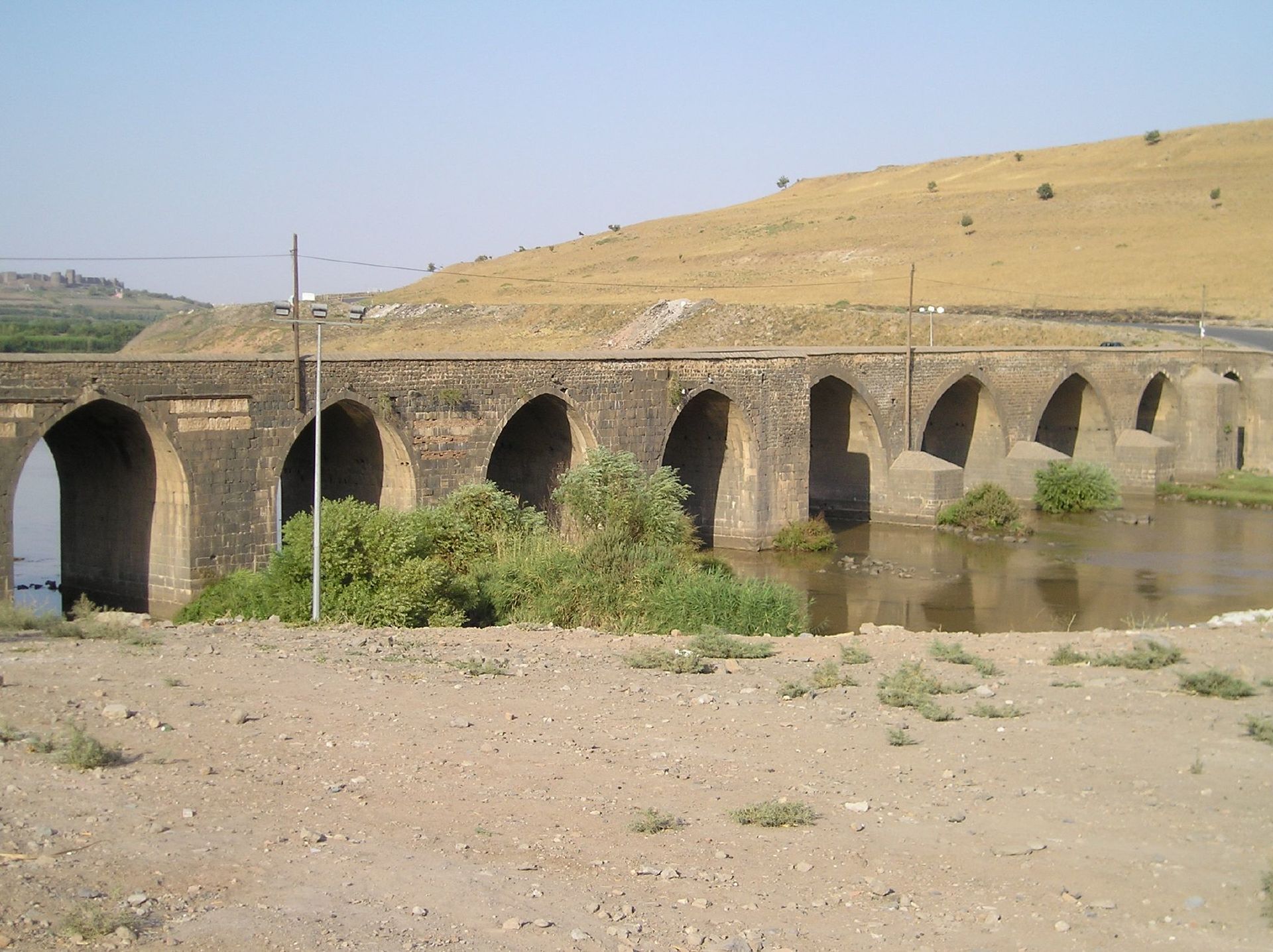
The Marwanid bridge of 1065 strides the river on ten basalt spans, below the UNESCO-listed Hevsel Gardens — 700 hectares of green between wall and water.
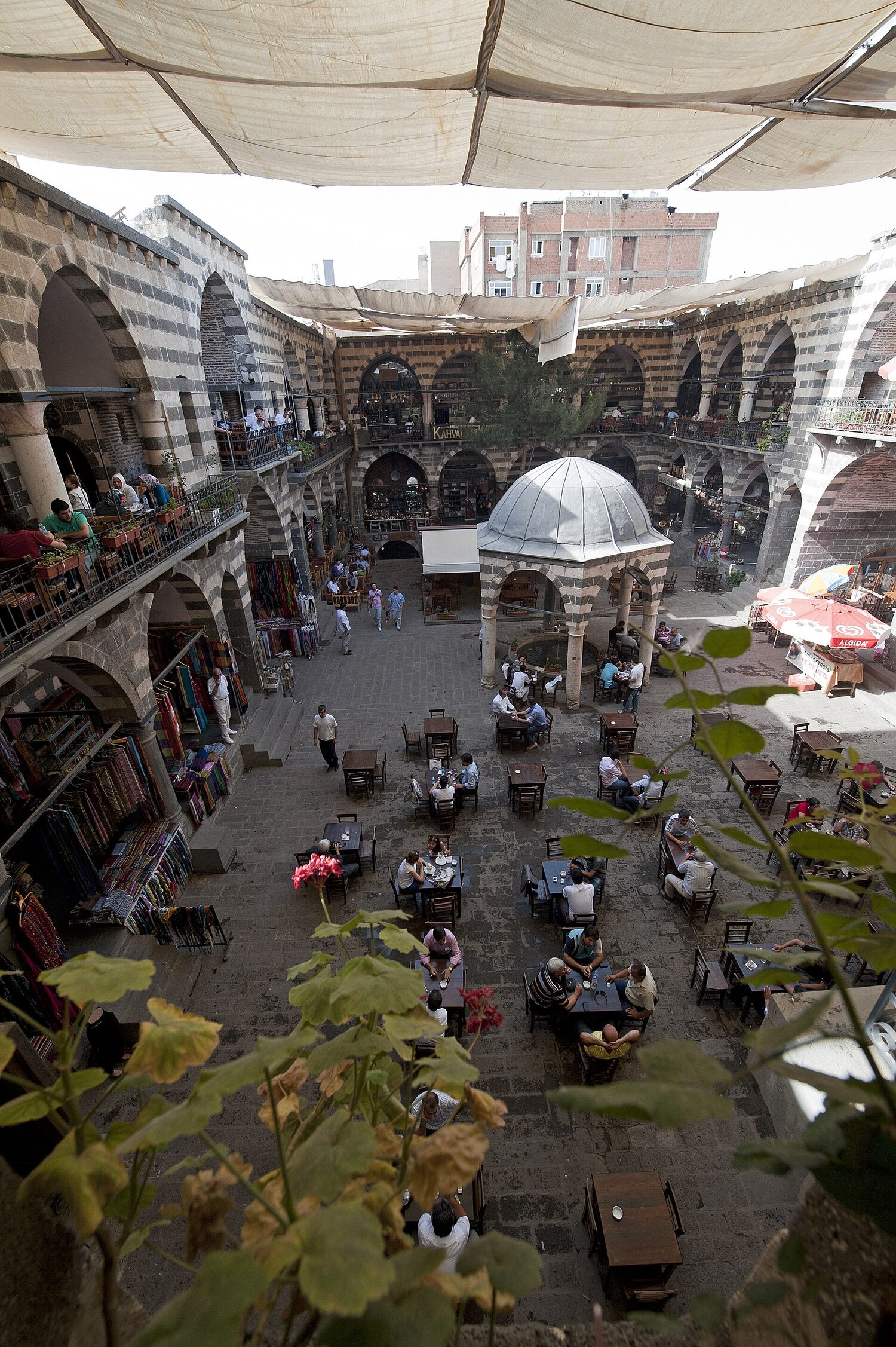
We close the day in a restored han — kaburga dolması, meftune, sour-cherry kebab — with a glass of Süryani wine, the Assyrian winemaking tradition that has run through this region for centuries.
Beyond the city · The Upper Tigris circuit
Diyarbakır is the hinge. Within a few hours sit the oldest temple ever found, a stone city on a hilltop, the legends of Abraham, and a Roman fort guarding a frontier against Persia. We string them into one journey.
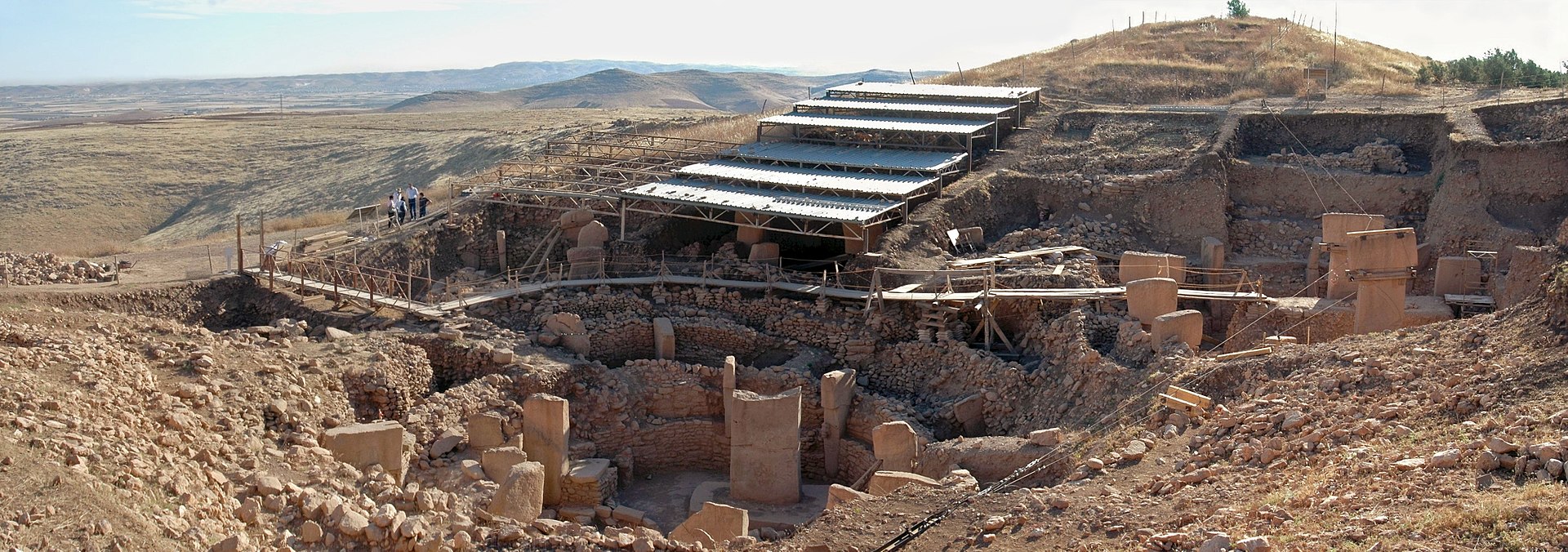
More than 10,000 years old — older than farming, pottery or writing — and widely called the oldest place of worship on earth. T-shaped pillars carved with foxes, scorpions and vultures, raised by people we are only beginning to understand.
The world's first sanctuary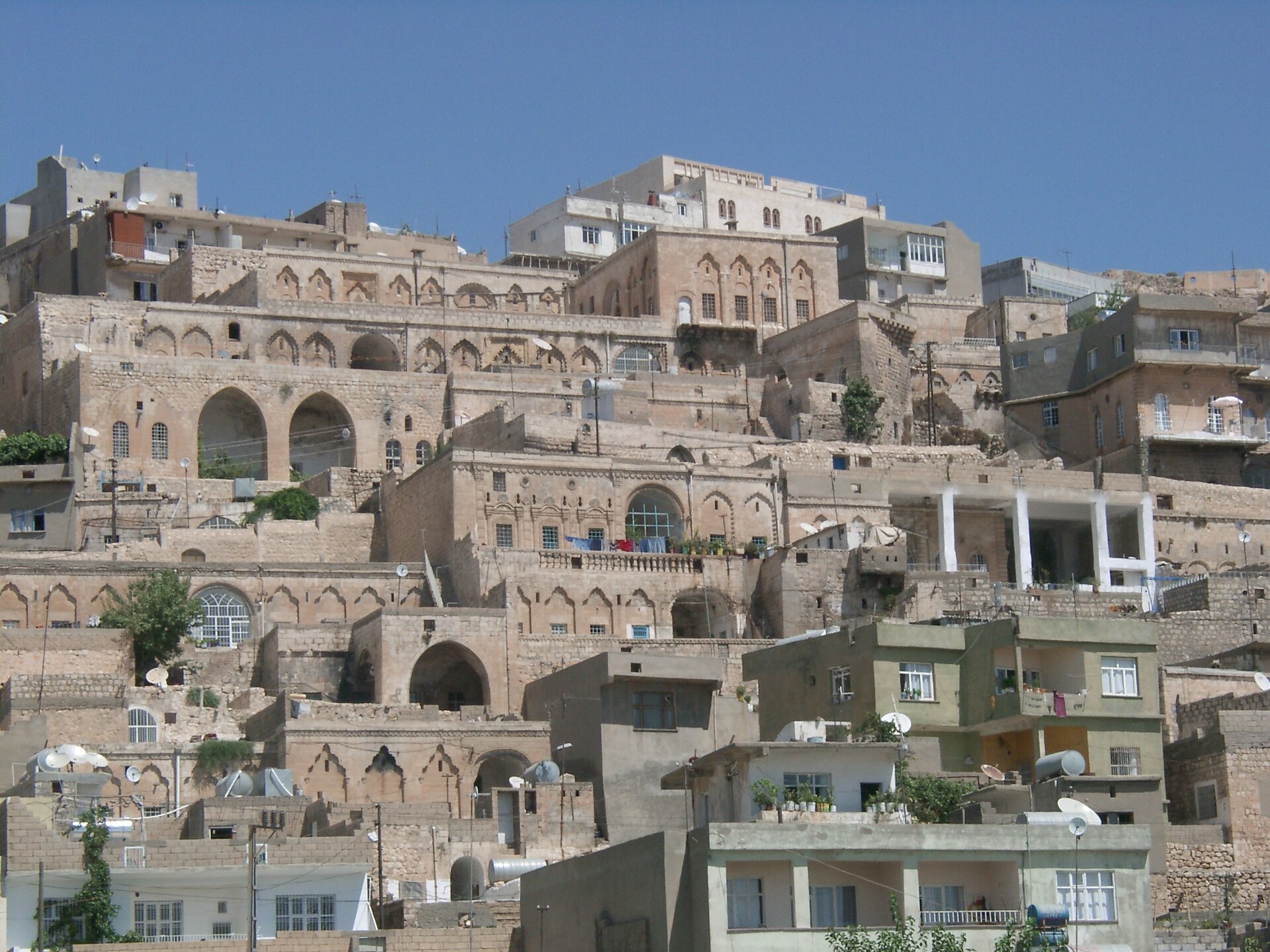
A honey-coloured city of carved limestone tumbling down a hill above the Mesopotamian plain — Artuqid mansions, terraced rooftops, and ancient monasteries where monks still pray in Aramaic, the language of the Bible.
Stone city on the plain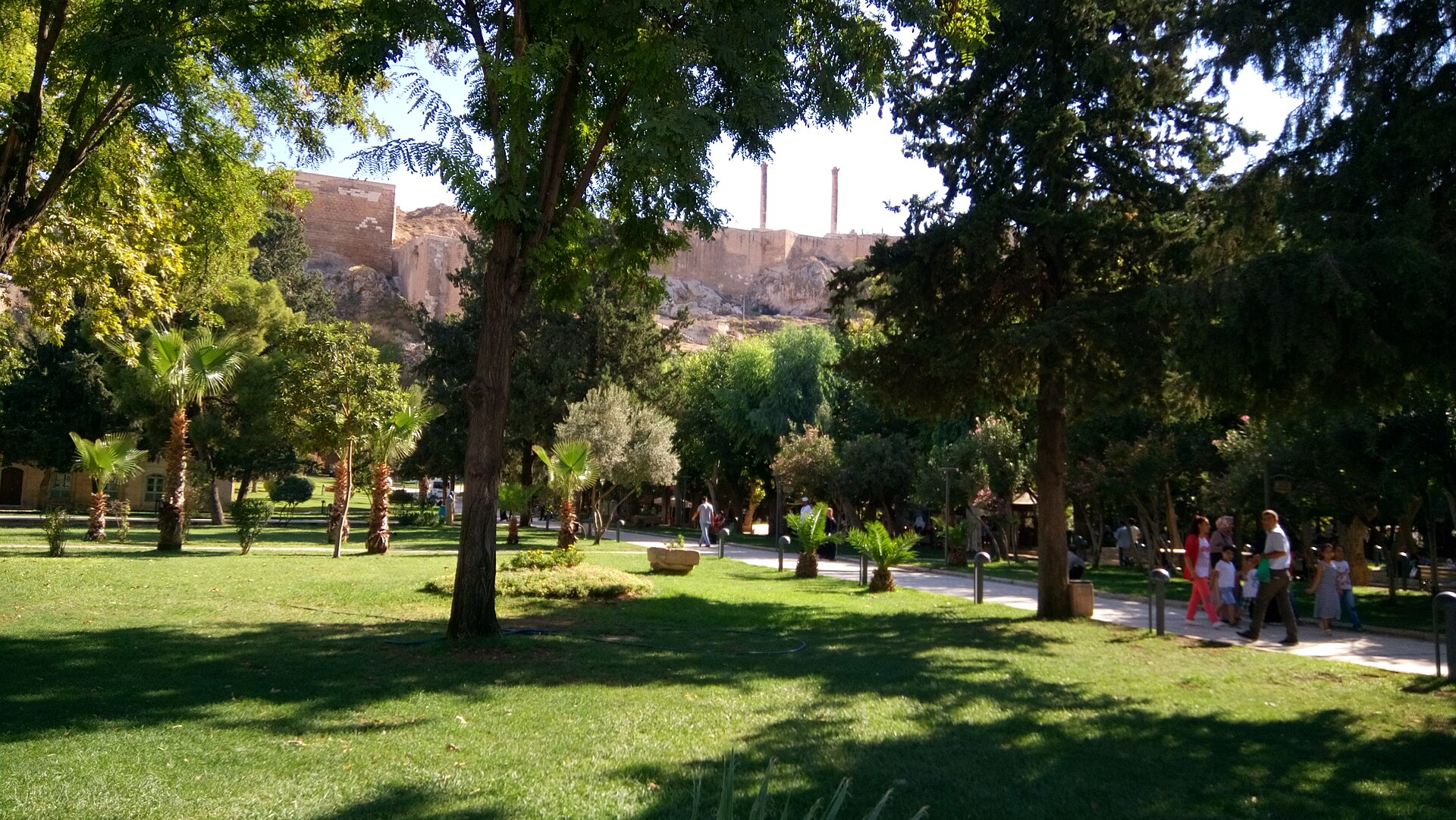
The City of Prophets. At Balıklıgöl, the carp-filled pool where legend says King Nimrod (Nemrut) hurled Abraham into a fire that turned to water. Beneath the old castle's twin columns, the oldest stories of the region are still told aloud.
Where the legends are set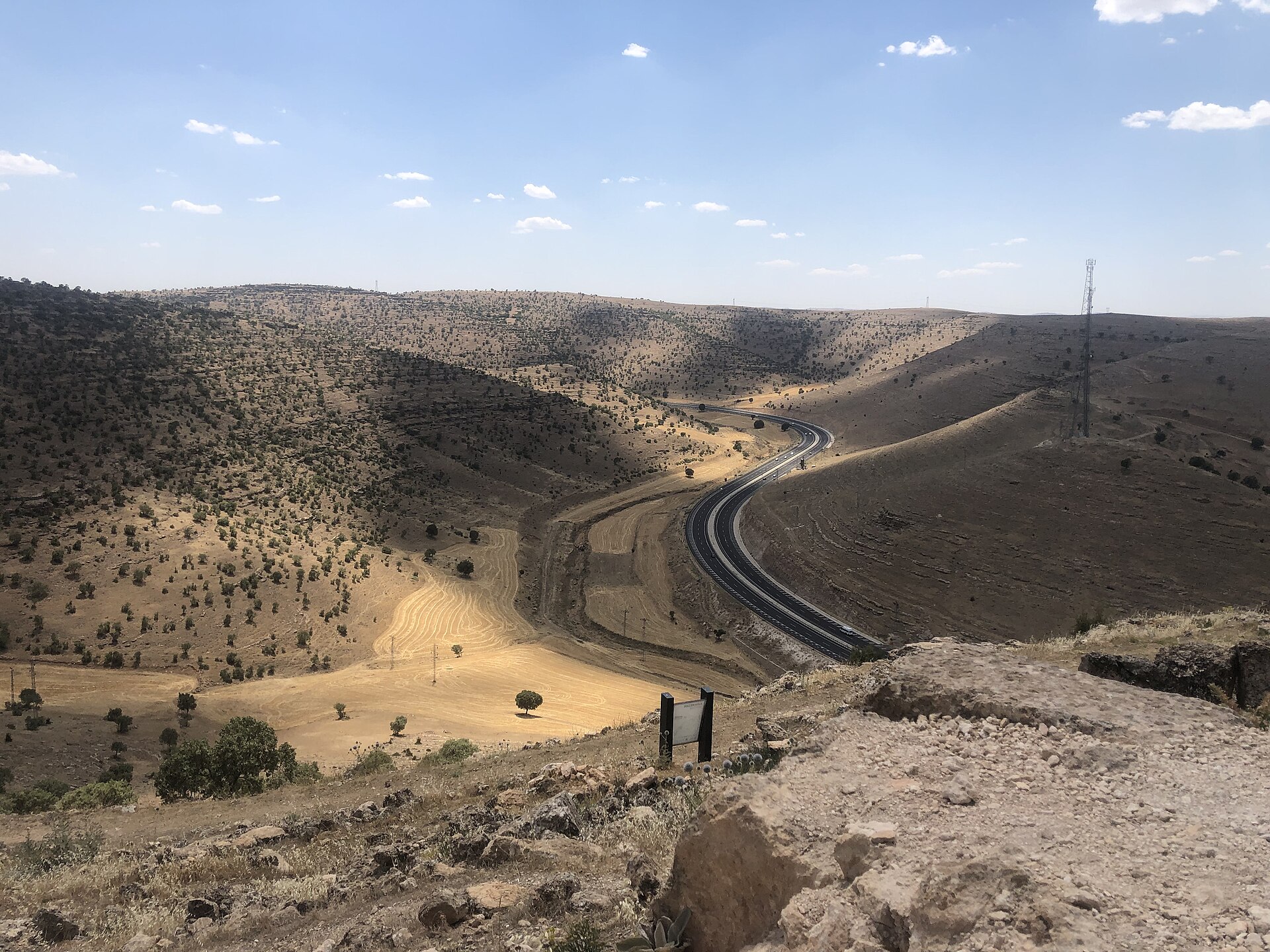
A Roman garrison on the empire's furthest eastern edge, watching the road where Rome and Sasanian Persia fought for centuries. Underground lies a Mithraeum — a hidden temple of the soldier-god Mithras, the only one known on the eastern frontier.
Rome's last watchtower against PersiaFor groups & tour leaders
Whether you bring a club, a university group, a family party or a ready-made tour you're leading yourself, we build the days around you.
From a single day inside the walls to a week across Upper Mesopotamia — paced for your group, not a coach schedule.
Local leaders, licensed guides and, at the digs, working archaeologists who can open doors a guidebook can't.
Airport transfers, comfortable vehicles, and hand-picked hotels — including caravanserais turned into hotels in Mardin and Sur.
Breakfasts in stone courtyards, regional feasts, and evenings with local Süryani wine in restored historic houses.
Plan your journey
Send the rough shape of your trip — group size, dates, how long you have — and we'll come back with a proposed route and a quote. No deposit to ask a question.